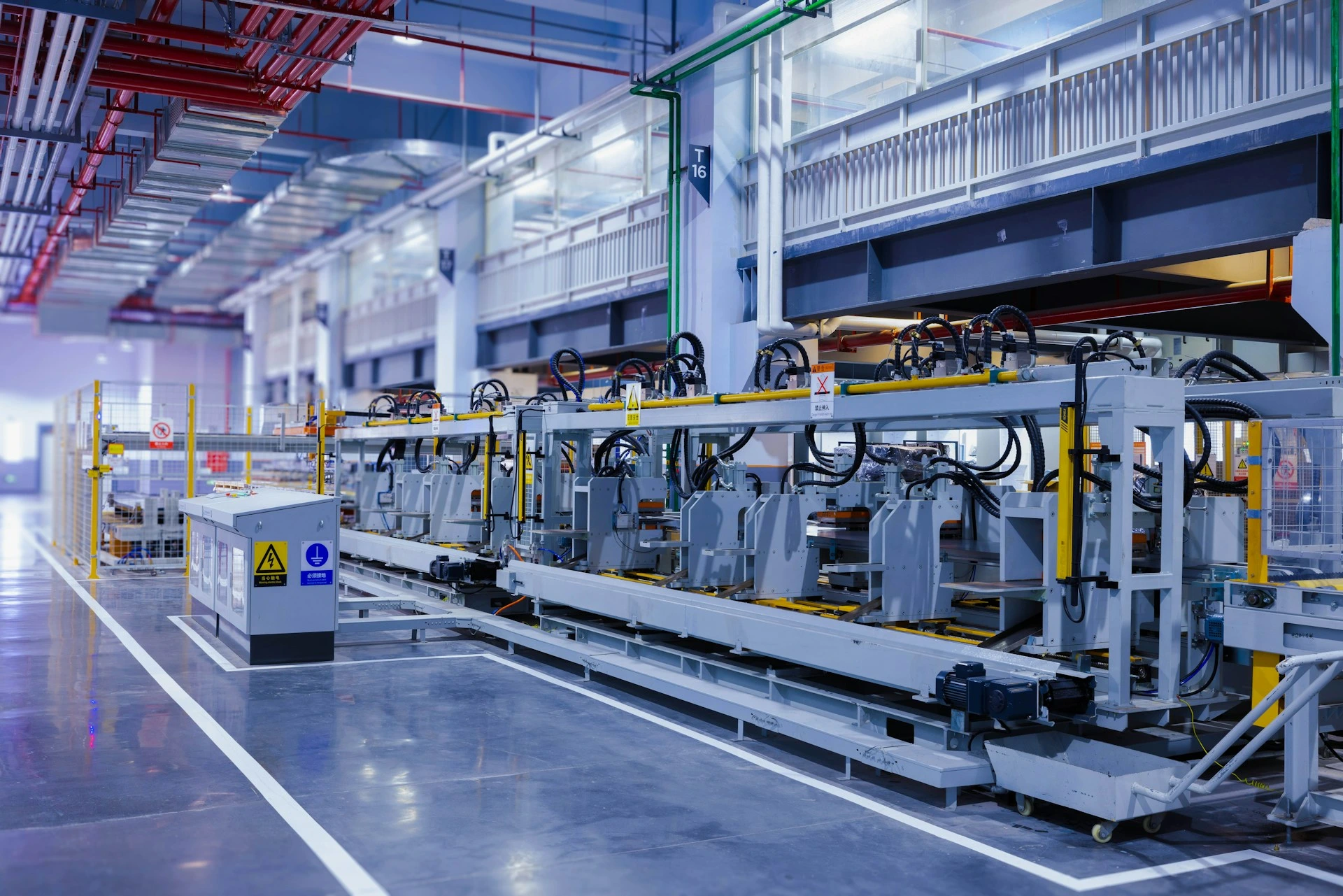
Not that long ago, modular construction was still viewed by some developers as a specialist approach used on a relatively small number of projects.
That perception has changed quickly.
Across the UK, offsite manufacturing is becoming a much more familiar part of the construction industry. Schools, healthcare facilities, apartment developments and commercial buildings are increasingly being designed with modular construction in mind.
For contractors facing tight deadlines and labour shortages, the attraction is fairly obvious. Building large sections of a project away from site can remove some of the uncertainty that often comes with traditional construction methods.
Behind the scenes, however, this shift is creating new demands for manufacturers and fabricators.
Offsite Construction Starts in the Factory
One of the biggest advantages of modular construction is that substantial parts of a building can be manufactured before they ever arrive on site.
Wall sections, structural frames, stair systems and service modules are often produced in controlled factory environments and then delivered ready for installation.
Contractors like the fact that production is less dependent on weather conditions, site access restrictions and other common delays.
The challenge is that fabrication companies have far less room for error.
Components produced hundreds of miles away need to fit together correctly once they reach site. A mistake discovered during installation can be expensive and time-consuming to rectify.
For manufacturers supplying the modular sector, accuracy has become increasingly important.
Steel Continues to Play a Major Role
Steel remains one of the most widely used materials within modular construction.
It allows manufacturers to create strong structural frameworks while maintaining relatively low weight compared to many traditional building methods. It is also well suited to repeatable production processes, which is a major advantage when large numbers of components need to be manufactured consistently.
Walk through most fabrication workshops supplying the modular sector and you’ll see plenty of hollow section steel waiting to be processed.
Square, rectangular and circular tube is used throughout a wide range of applications, from support structures and framework systems to staircases, walkways and connection assemblies.
As modular construction grows, demand for efficient tube processing continues to grow alongside it.
Production Efficiency Matters
Fabrication businesses supplying offsite construction projects are often working to demanding schedules.
The pressure is not simply about producing components accurately. They also need to move materials through production quickly enough to meet delivery deadlines.
Nobody wants steel sitting between workstations waiting for the next process.
When hundreds or thousands of fabricated parts are required for a project, delays in one area of production can quickly affect everything else. Lost time in the workshop often becomes lost time elsewhere in the supply chain.
That is one reason many manufacturers are reviewing how efficiently tube sections are processed and prepared before fabrication and assembly.
Tube Processing Has Changed Considerably
The way steel tube is processed today looks very different to how it did ten or fifteen years ago.
Producing holes, slots, mitres and connection details often involved several separate operations, each requiring additional handling and setup time.
Modern processing technology has simplified much of that work.
For manufacturers producing large quantities of steel sections, consistency is particularly important. The hundredth component needs to match the first just as accurately as the second or third.
That requirement for repeatability fits naturally with the demands of modular construction, where components are expected to arrive ready for assembly with minimal adjustment.
Technology Is Supporting Faster Production
As workloads increase, manufacturers are looking for ways to improve both accuracy and throughput.
That’s one reason why more fabrication businesses are investing in modern tube laser cutting machines. Being able to produce slots, joints and profiles in a single operation helps keep production moving and reduces the amount of manual work required afterwards.
For workshops handling large volumes of structural tube, reducing unnecessary processing stages can make a noticeable difference to overall productivity.
The benefits are not always dramatic for a single component. The gains tend to become more apparent in larger production runs, where consistency and workflow efficiency matter most.
Modular Construction Shows No Signs of Disappearing
Few people within the construction industry expect offsite manufacturing to fade away.
If anything, pressure to build faster, control costs and improve project certainty is encouraging more developers to explore modular methods rather than fewer.
That trend is creating opportunities throughout the supply chain, particularly for manufacturers supplying fabricated steel components.
As demand continues to increase, the ability to process tubes accurately, efficiently and at scale is likely to become even more important.
The finished building may be what people see, but much of the work that makes modular construction possible starts long before installation begins. For many fabricators, precision tube processing is becoming an increasingly important part of that process.
Leave a Reply